
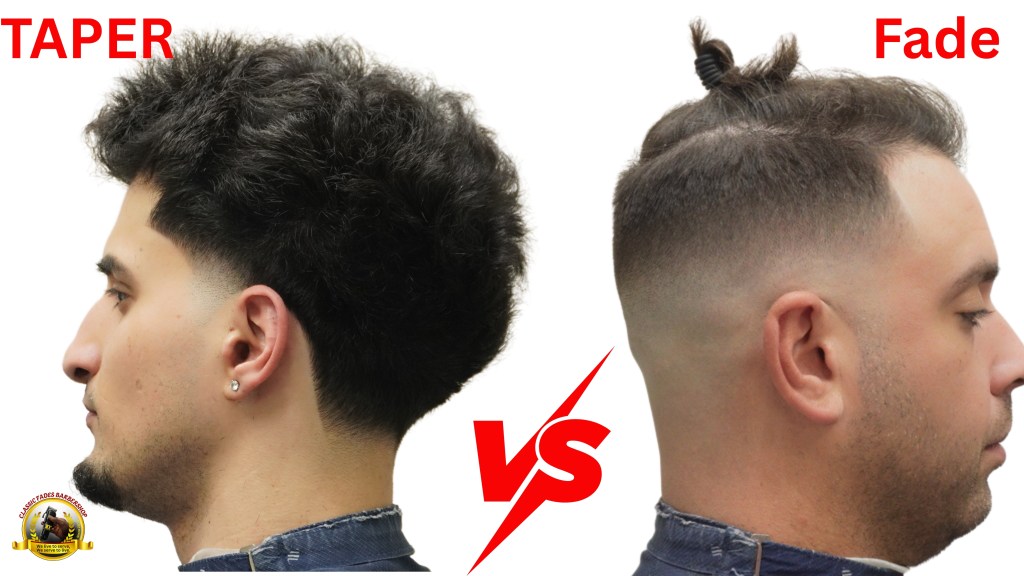
What is a Taper?
Many clients misjudge the request.
However, they enter a barbershop for the first time and sit in the chair.
They may ask for a taper vs fade; they actually want a fade, so I show examples on posters.
After that, they understand what they meant was actually a fade and not a taper.
I think the confusion between taper vs fade comes from misrepresenting the words.
Additionally, here is the real difference between the two: what is a taper?
A taper may be called a temple fade.
It is a small tapering or fading above the sideburns or around the temple of a human face.
Depending on the taper type, the service also involves a slight fade at the lower back of the head.
Now, there are three main types of taper: high taper, mid taper, and low taper.
Most tapers can be bald or almost bald. This usually means using a number 1 guard or blade, and rarely exceeds a one-and-a-half blade. A
common reason for a taper, in my experience, is clients wanting to grow out their hair and stay neat. They still aim for a presentable style as
if they had just had a haircut. They then ask what they can do, and the barber often suggests a taper. It’s amazing what a small taper can
do to transform one’s look.
What is a Fade?
Similar to other cuts, a fade needs clear client consultation. It clarifies what haircut the client desires. First and foremost, there are three main fades similar to a taper: high, mid, and low.
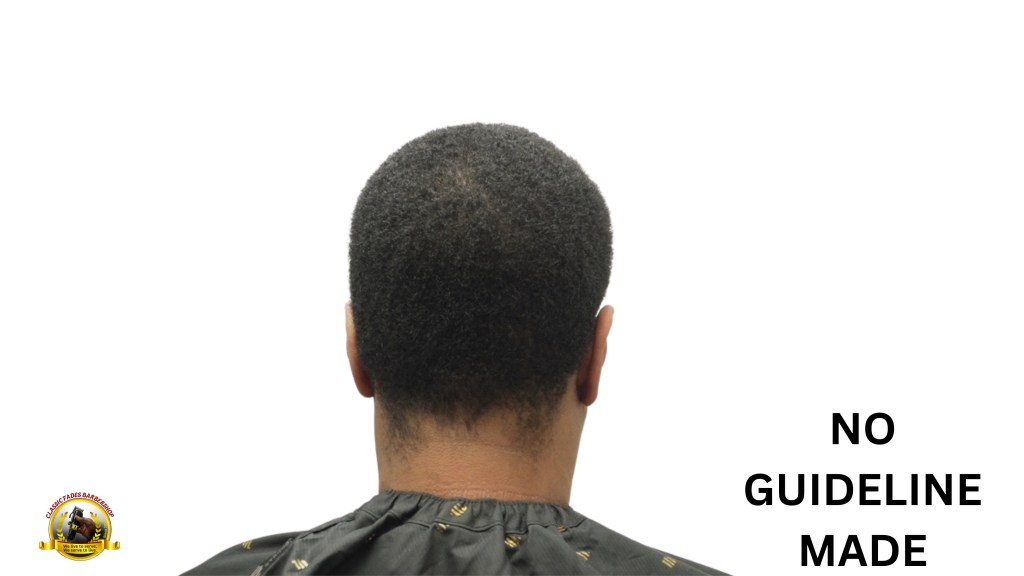
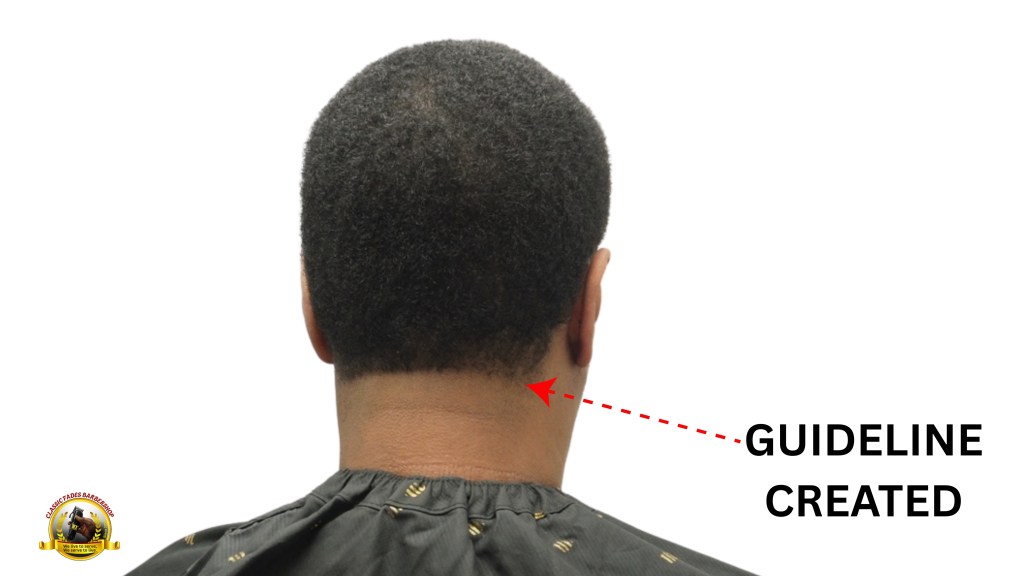
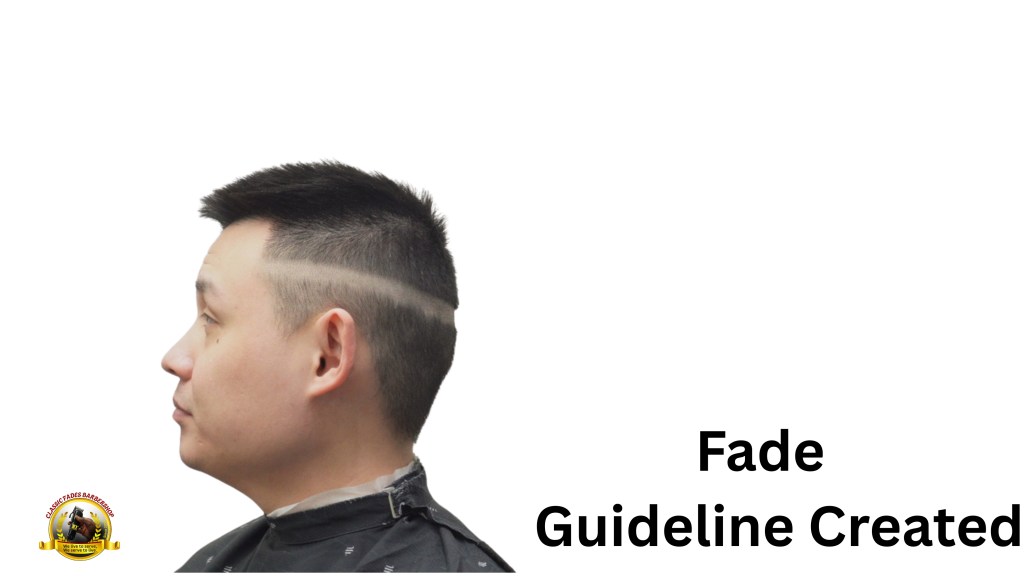
First, most barbers use a clipper to create a guideline from the lowest blade requested by the client.
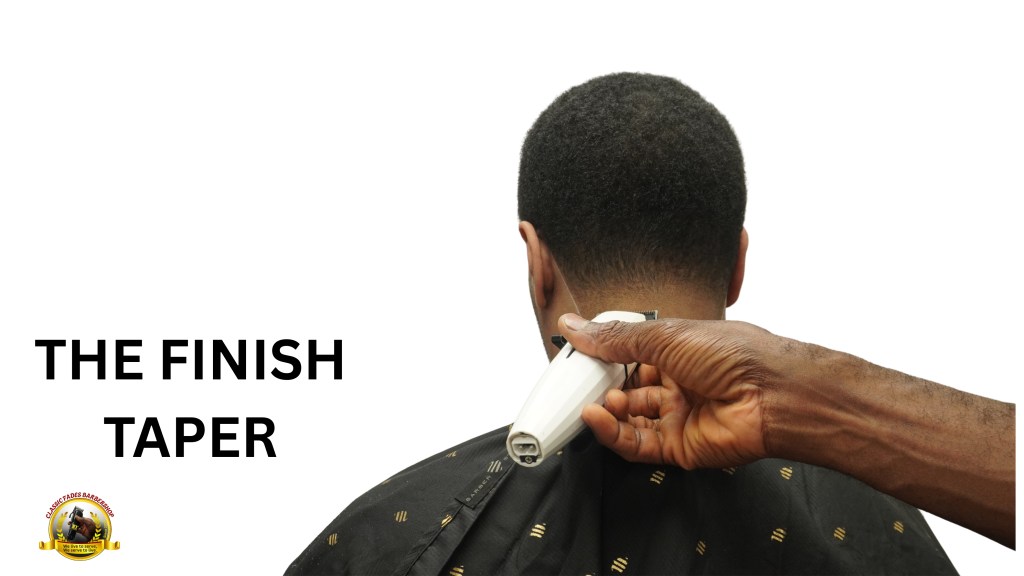
Next, the barber makes a second guideline with a slightly higher blade, then blends out the lines.
Additionally, this process involves changing blades or guards to remove lines, achieving a fine, smooth, blurry finish.
The choice between taper vs fade reflects how you blend those lines.


How often should clients get a fade?
Most clients visit the barbershop every two weeks to refresh their fade, but depending on their profession or lifestyle, they may get a fade
every week.
When a fade is done right, it can or should last the client for a week or two. On the opposite side, if the fade isn’t done right, in a few days
you, the client or anyone will notice the bad job done by the barber. With a good fade, a client can go for a couple of months without getting
a haircut, and his hairstyle will not change drastically; it will grow uniformly and very evenly. On the other hand, bad haircuts won’t last; he
will have to find the nearest barber to fix him up.
How long does it take to do a fade?
Here’s another important point to note: a good fade should normally take the barber around 45 min to an hour, depending on the amount of
hair the barber has to work with or how bad of a job the previous barber did.
In conclusion, both taper and fades are great choices of haircuts or hairstyles; both can work at different times and seasons in one’s life.
They just require proper consultation, and that will eliminate any misunderstanding that could arise.
